AI Foundations
Build the programming and data foundation required for applied AI.
- Python Programming
- Machine Learning
- Data Science Foundations

 +91 9317788822, 9357788822

THE EXCELLENCE LEARNING EXPERIENCE
From classroom concepts to practical projects—build skills with a structured approach.
Understand, practise, apply
Improve with trainer guidance
Ask about available batches
Available in Premium+ programs
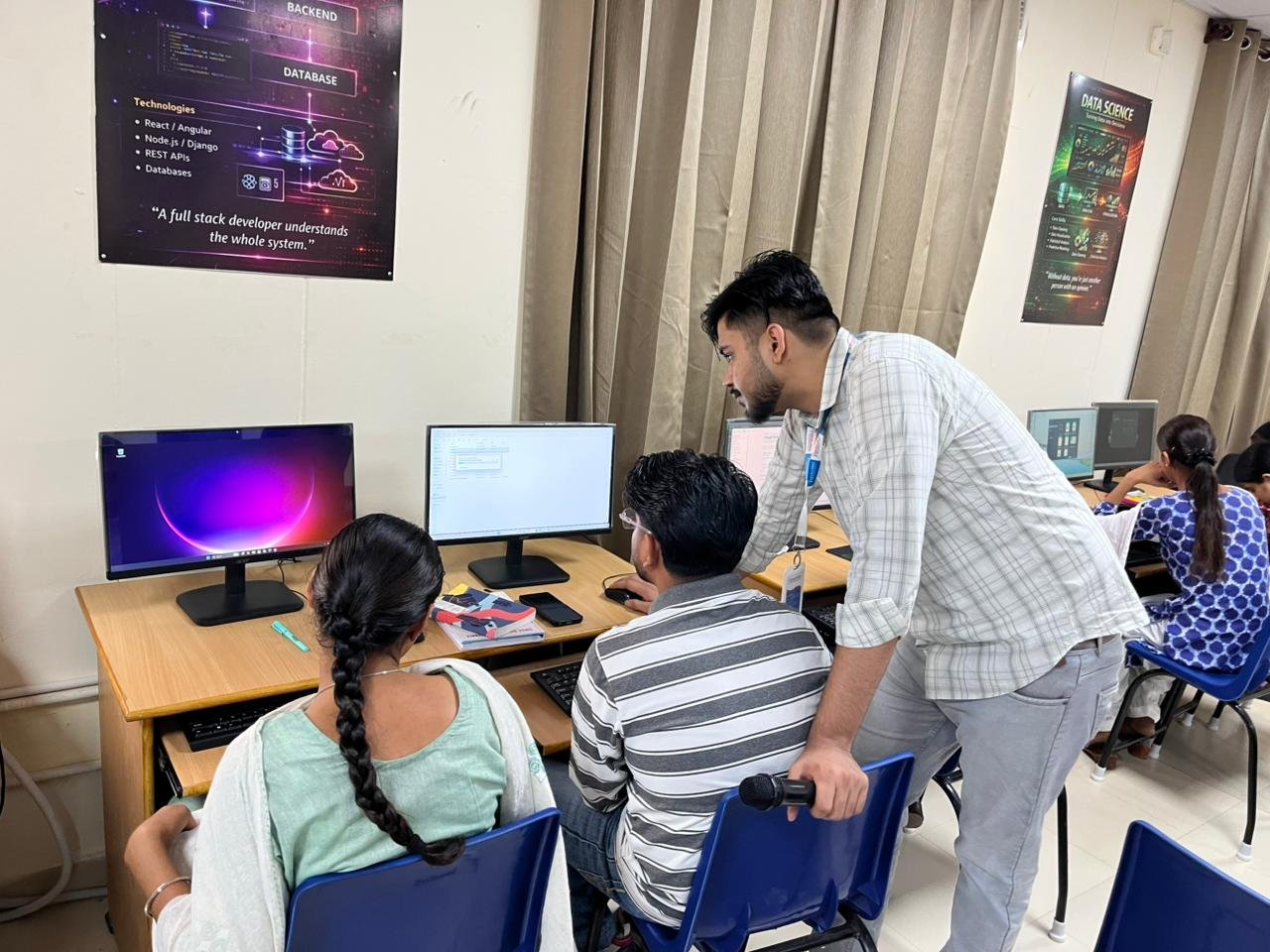
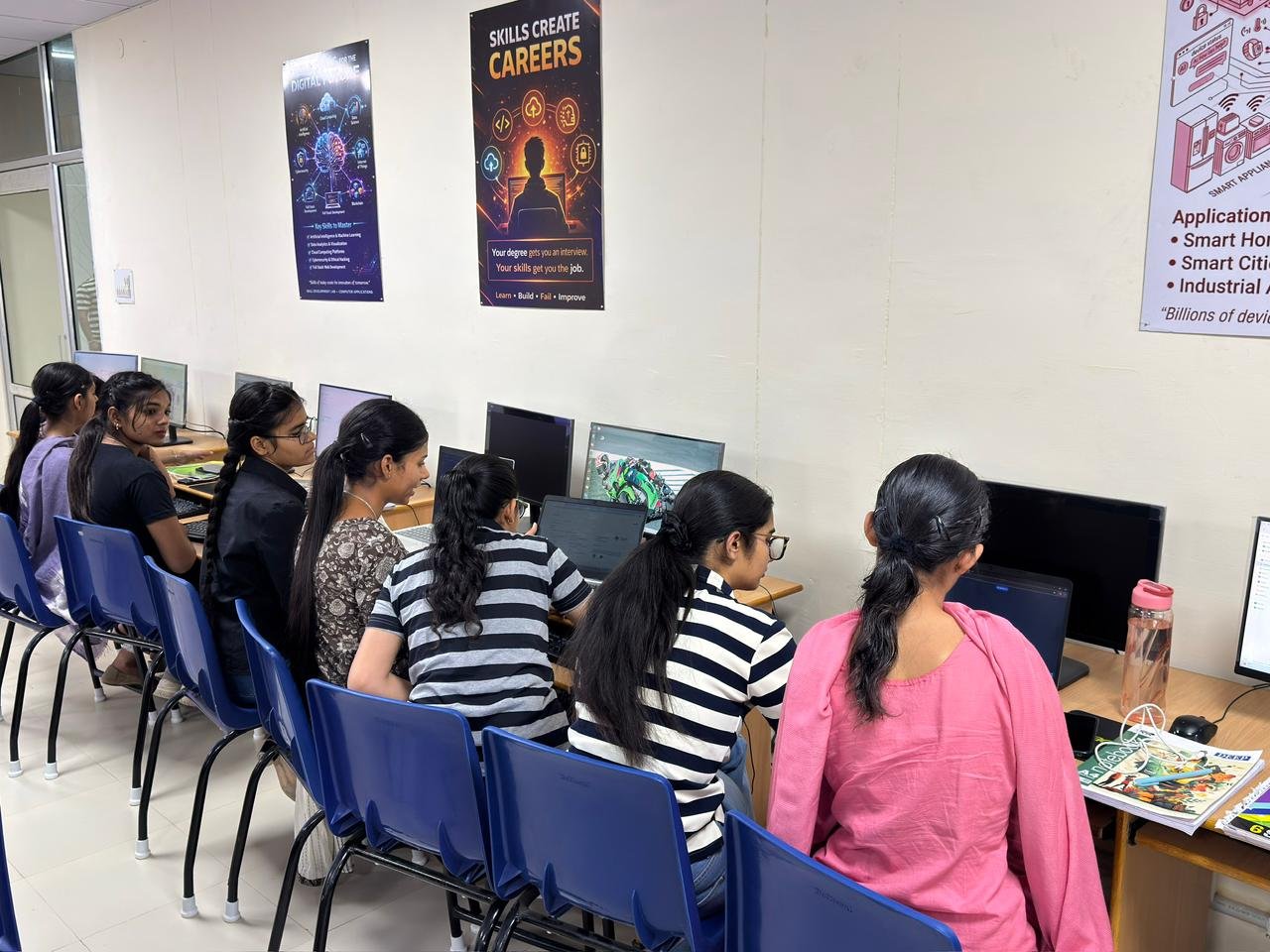








The AI course provided a clear learning path from Python fundamentals to Machine Learning and Generative AI, making complex concepts easier to understand practically.

I joined the AI Course to upgrade my skills and gained practical experience through projects, assignments, mentorship, and updated AI technologies throughout.

Excellent AI training with knowledgeable mentors and hands-on projects. I learned Machine Learning, Deep Learning, Generative AI, and practical techniques used in industry.

The Artificial Intelligence Course at helped me understand Python, Machine Learning, Generative AI, and real-world applications through practical projects and mentorship.


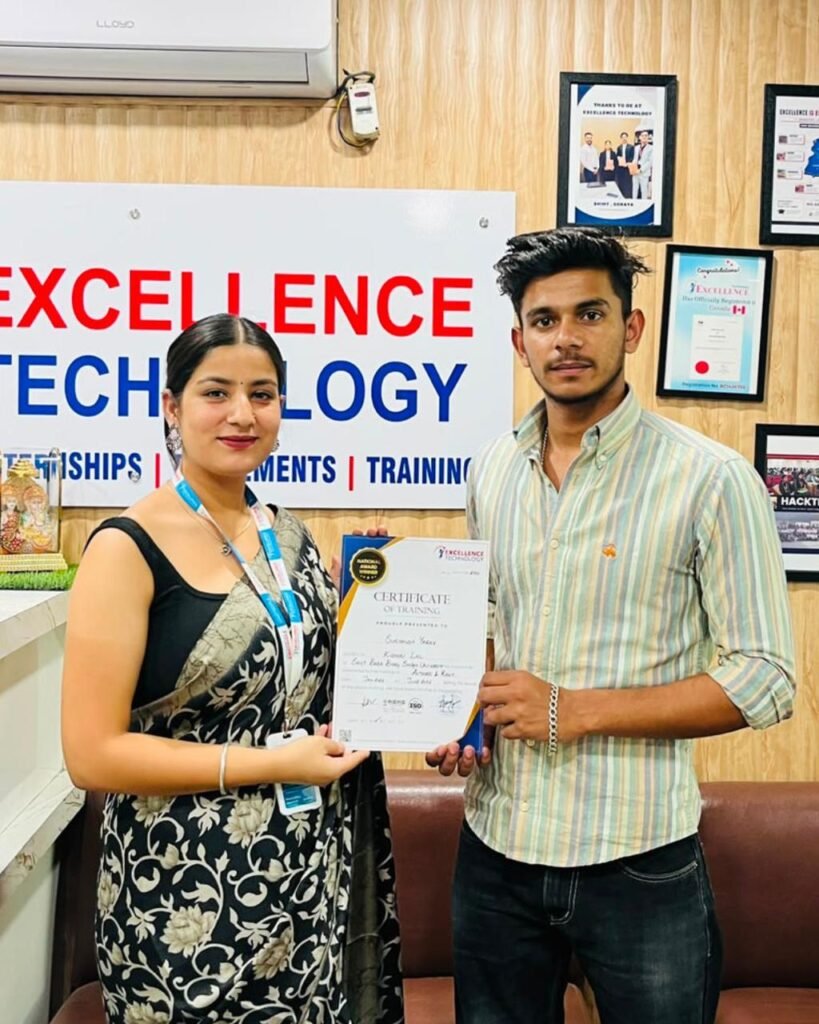
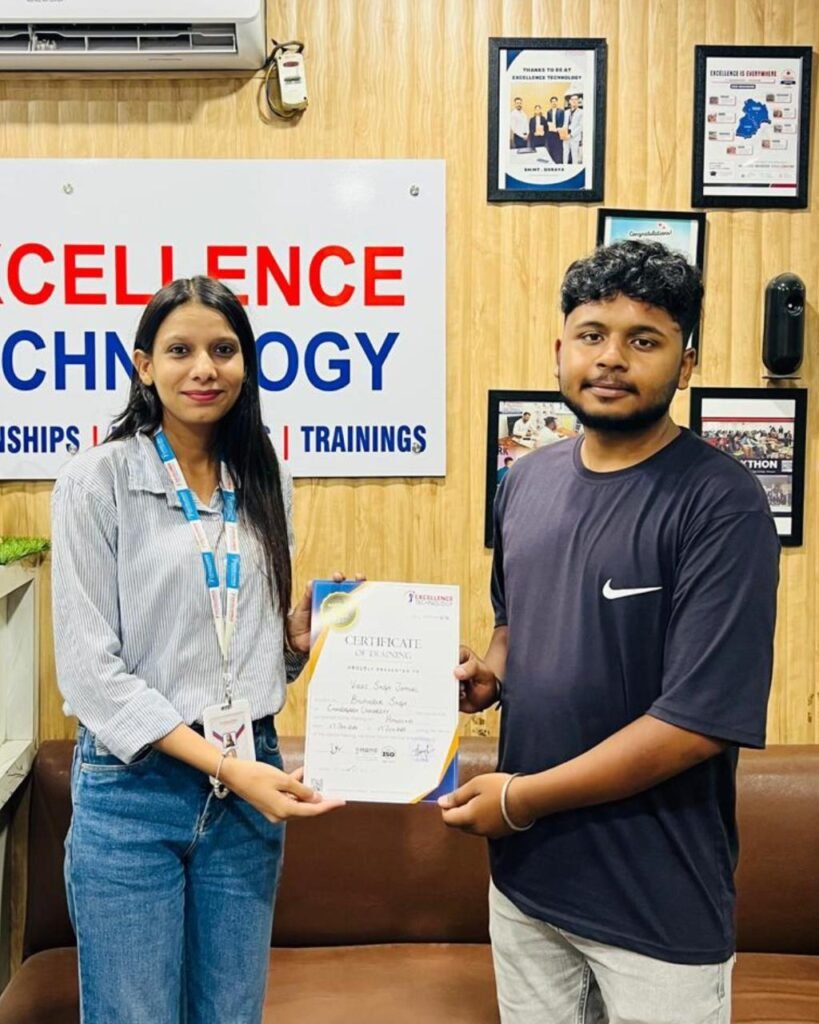
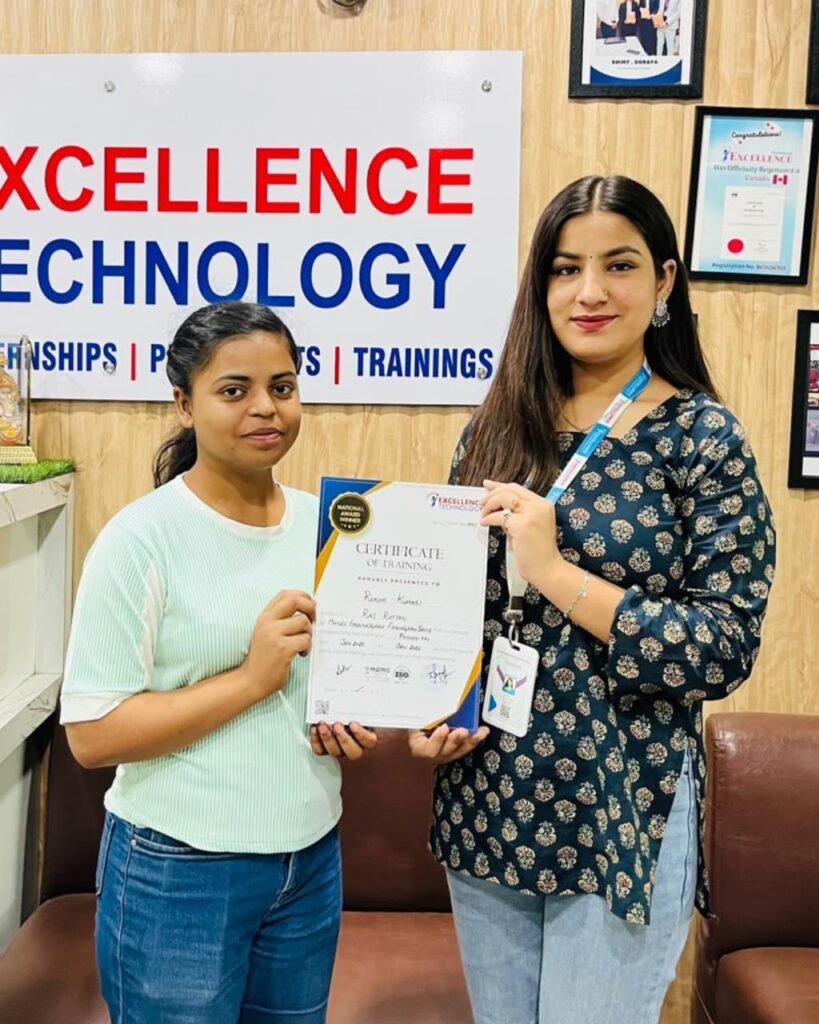
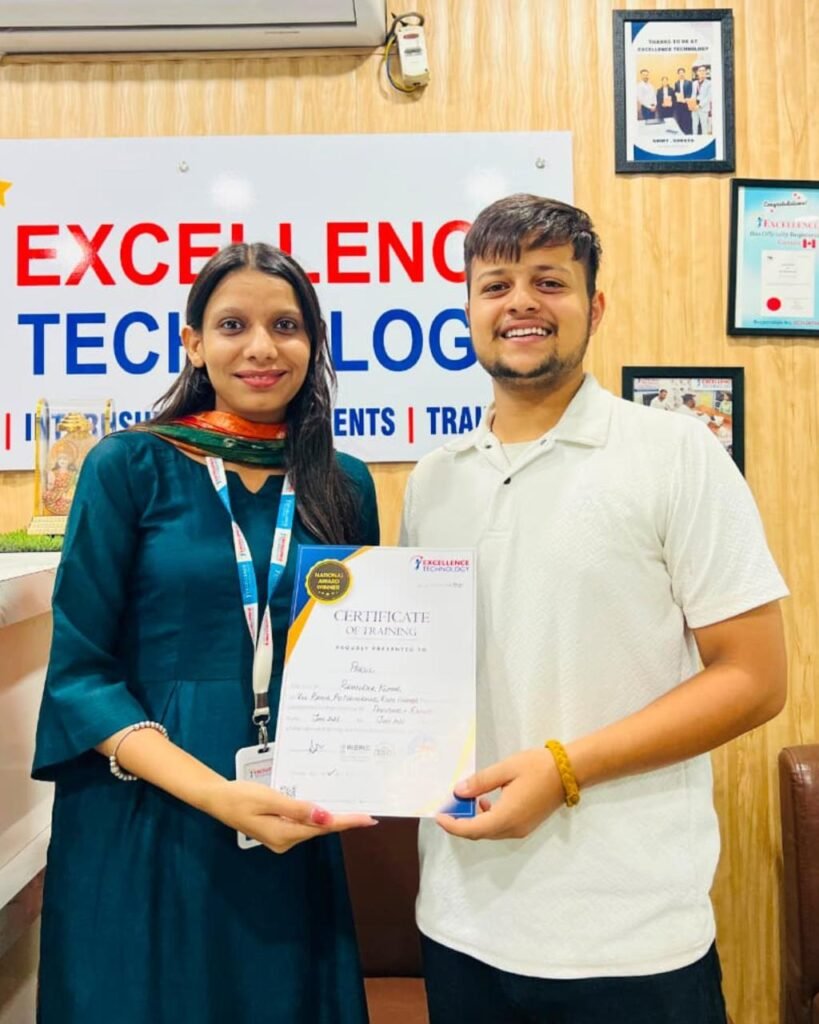

Completed Their Course Certification from Excellence Technology



Compare the learning depth before selecting your Chandigarh classroom program.
Build the programming and data foundation required for applied AI.
Move from core ML into deep learning and practical analytics.
Learn how AI systems plan, use tools and execute guided workflows.
Build a deeper portfolio across modern AI and generative systems.
Compare syllabus, duration, projects and fees with a Chandigarh learning advisor.
A structured path from classroom concepts to projects and interview preparation.
These neutral image placeholders can be replaced with verified student photographs and project screenshots later.
A domain-focused assistant that retrieves relevant information and produces guided responses.
A machine-learning project that recommends content or products from behavioural data.
An image-based model for classification, detection or a practical diagnostic workflow.
Recent feedback linked to the Sector 34A, Chandigarh Google Business Profile.
Based on 352 Google reviews
Verified September 2026
“The institute provides a well-structured learning environment with knowledgeable and supportive faculty members.”
“The training sessions were very informative, practical, and educational.”
Check current fees, detailed syllabus and classroom timings for Sector 34A.
AI COURSE AT A GLANCE
Know the course, explore your options and speak with a Chandigarh learning advisor.
Choose your program depth
SCO 62–63, Second Floor
Students, graduates & professionals
Modules depend on your selected track
Practise with trainer feedback
Confirm current fees and timings
Advanced AI modules and placement support vary by selected program.
Choose the Right Learning Path
Use these distinctions to select a course according to the work you want to do—not simply according to the latest course name.
An AI course focuses on building systems that can learn, generate, reason or automate tasks using machine learning, deep learning and modern AI models. Data Science focuses more broadly on collecting, cleaning, analysing and explaining data for decisions. Both use Python and statistics, but AI usually goes deeper into intelligent applications, while Data Science gives greater emphasis to analytics, experimentation and insight communication.
Machine Learning is a major part of Artificial Intelligence. A focused ML course teaches data preparation, model training, evaluation and prediction. A broader AI course may additionally cover deep learning, natural-language applications, Generative AI and Agentic AI. Choose ML for specialised predictive modelling; choose AI when you want a wider learning path that includes ML plus modern intelligent application development.
Data Analytics is often a quicker entry route for beginners because it concentrates on Excel, SQL, Power BI or Tableau, reporting and business insights. Data Science normally adds Python, statistics, machine learning and predictive modelling. Choose analytics if you want dashboard and analyst roles sooner; choose Data Science if you are ready for more coding and mathematics and want to work toward modelling-focused roles.
The core course objective can remain similar at both centres, so your choice should depend on travel time, batch timing, trainer availability and the specific program offered. Chandigarh classes are conducted at Sector 34A, while Mohali classes are available at Sector 72. Attend a demo at the preferred centre and confirm the current trainer and batch rather than selecting only by the city name.
A three-month AI course is suitable for focused foundations, structured upskilling or learners who already know Python. A six-month program allows more time for Python, statistics, machine learning, deep learning, tools and guided projects. Beginners seeking portfolio development generally benefit from the longer path, while experienced learners may choose a shorter program after a skill assessment identifies the modules they actually need.
Before You Enrol
Direct answers to the questions students commonly ask before selecting a batch and program level.
The Chandigarh AI syllabus can include Python programming, NumPy, Pandas, data visualisation, statistics, supervised and unsupervised machine learning, model evaluation and selected deep-learning topics. Advanced programs may add Generative AI and Agentic AI. Exact coverage depends on the chosen program, so review the location-specific curriculum and project list on the Chandigarh AI course page before admission.
You do not need advanced mathematics to begin learning AI, but basic algebra, percentages, graphs and logical thinking are useful. As you progress into machine learning and deep learning, probability, statistics, vectors and optimisation become more important. A beginner-friendly course should teach the required concepts alongside practical code so learners understand why a model works without waiting to master every mathematical topic first.
Yes. BCA and B.Tech students usually have a useful technical base, while non-technical learners can start with computer fundamentals, Python and essential mathematics. Success depends more on consistent practice and a correctly sequenced learning path than on one specific degree. Non-technical students should allow additional time for programming exercises and begin with guided projects before moving to advanced model development.
Advanced Excellence Technology AI programs include modern topics such as Generative AI and Agentic AI according to the selected plan. Learners may study prompting, model APIs, retrieval-based workflows, AI assistants, tool use and agent concepts after building Python and machine-learning foundations. Confirm the exact modules in your chosen Diamond or Diploma plan because advanced coverage, project depth and tools can differ by program duration.
Projects may include a chatbot, recommendation system, prediction model, classification workflow, image-based application or a Generative AI assistant, depending on the program. Students should work through data preparation, training or model integration, evaluation and presentation rather than only copying finished code. Ask to see the current project list because project complexity should match the modules and duration of the selected course.
Placement assistance is available with eligible Premium, Platinum, Diamond and Diploma programs. Support can include resume preparation, portfolio guidance, mock interviews, interview opportunities and job-search planning. Placement assistance does not mean an automatic job offer; outcomes depend on attendance, project quality, technical performance, communication skills and employer requirements. Confirm the current eligibility conditions and included support before choosing a program.
Choose your next step
Compare the detailed syllabus, confirm the next Chandigarh batch or speak with an advisor—without disturbing your current page journey.
Request the latest AI curriculum covering Machine Learning, Deep Learning, Generative AI and Agentic AI.
Request SyllabusUnderstand the teaching method, project approach and suitable program before making a decision.
Book Free DemoAsk about current fees, batch timings, eligibility and classroom training at Sector 34A, Chandigarh.
Ask on WhatsAppEXPLORE THE CURRICULUM
Select a module to explore its topics, tools and practical learning.
MODULE 01
Build the programming and data-handling foundations for practical AI.
Clean a dataset and create a reusable Python analysis script.
MODULE 02
Understand the data and mathematical concepts used in model building.
Explore a dataset, query key metrics and present visual findings.
MODULE 03
Train, compare and evaluate predictive models.
Build and evaluate a prediction or classification model.
MODULE 04
Develop neural-network foundations and practical training workflows.
Train a neural network and compare validation performance.
MODULE 05
Work with text and visual data through applied AI workflows.
Develop a sentiment-analysis or image-classification application.
MODULE 06
Understand how to build and evaluate useful LLM applications.
Build and evaluate a task-focused AI assistant.
MODULE 07
Ground AI responses in relevant documents and retrieved information.
Create a document-based question-answering assistant with source references.
MODULE 08
Create controlled, tool-using AI workflows.
Build a tool-using workflow with human review and failure handling.
MODULE 09
Turn AI models and workflows into usable applications.
Deploy an AI API with validation, documentation and basic monitoring.
MODULE 10
Bring the learning together in an end-to-end AI project.
Build, document and demonstrate a complete portfolio application.
TOOLS FOR PRACTICAL AI LEARNING
See how each platform supports your practical learning.
Build foundations and train models.
 Python
 Jupyter
 Scikit-learn
 PyTorch
Practise → Train → Evaluate
Create language apps and workflows.
 Hugging Face
 LangChain
 LangGraph
 n8n
Prompt → Retrieve → Automate
Turn your work into usable applications.
 FastAPI
 PostgreSQL
 Docker
 GitHub
Build → Deploy → Present
Platforms and module depth depend on the selected course.
Explore the Curriculum ↑CAREER & PLACEMENT SUPPORT
Build your portfolio, strengthen your profile and prepare for interviews.
Showcase guided projects on GitHub and your portfolio.
Get resume and LinkedIn profile guidance.
Prepare with technical mocks and communication practice.
Explore relevant openings through the placement portal.
Placement support: Premium, Platinum, Diamond & Diploma programmes.